Nonviolent Communication
Speak without blame, listen without defense
You never listen. You always do this. These sentences start conversations. They also end them. Nonviolent Communication offers a different way.
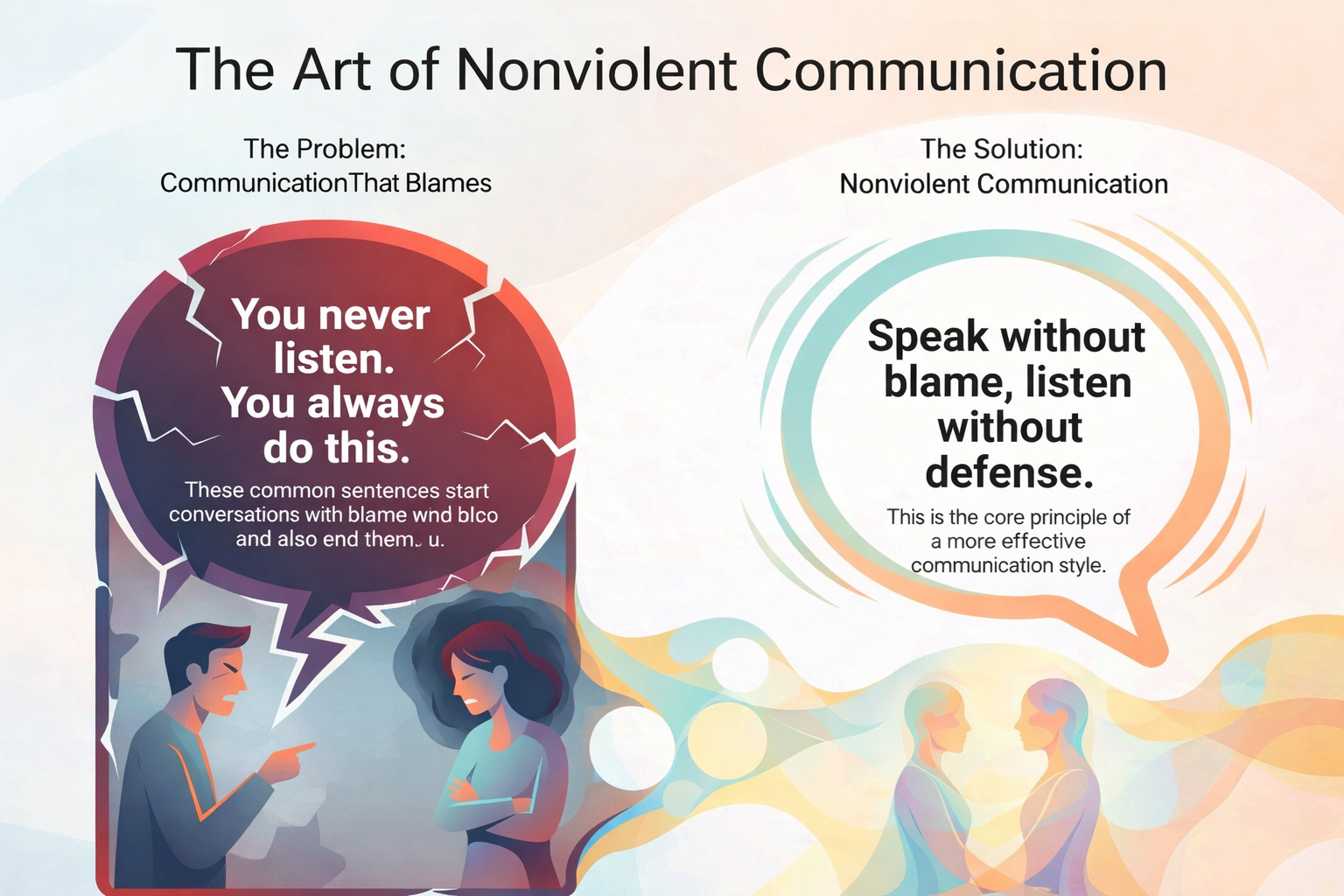
A framework for speaking truth without triggering defensiveness.
Nonviolent Communication is a framework for expressing yourself honestly while fostering connection. The structure: Observation (state facts), Feeling (express emotion), Need (identify underlying need), Request (make clear ask). NVC removes blame and focuses on needs.
The Mental Model
-
Observe Without Judgment
State what happened factually. -
Name Your Feeling
Use I feel statements. Own your emotions. -
Identify Your Need
What universal need isn't being met? -
Make a Request
Ask for specific behavior change.
A Worked Example
Maya's partner cancels plans last-minute. NVC approach: When plans change last-minute, I feel disappointed because I value our time and need consistency. Would you let me know sooner if something comes up? Her partner doesn't feel attacked. He commits to texting earlier.
When to Apply
- Conversations escalate into arguments
- Delivering difficult feedback
- Someone shuts down
- Resolving conflict
When Not to Apply
- You're in immediate danger
- Other person won't engage respectfully
- Using it to manipulate
Try This Once
Think of one recent conflict. Rewrite what you said using NVC: Observation, Feeling, Need, Request.