The Reciprocity Principle
People feel compelled to return favors
A stranger holds the door. You feel obligated to thank them. A colleague helps. You want to return the favor. This is a psychological force.
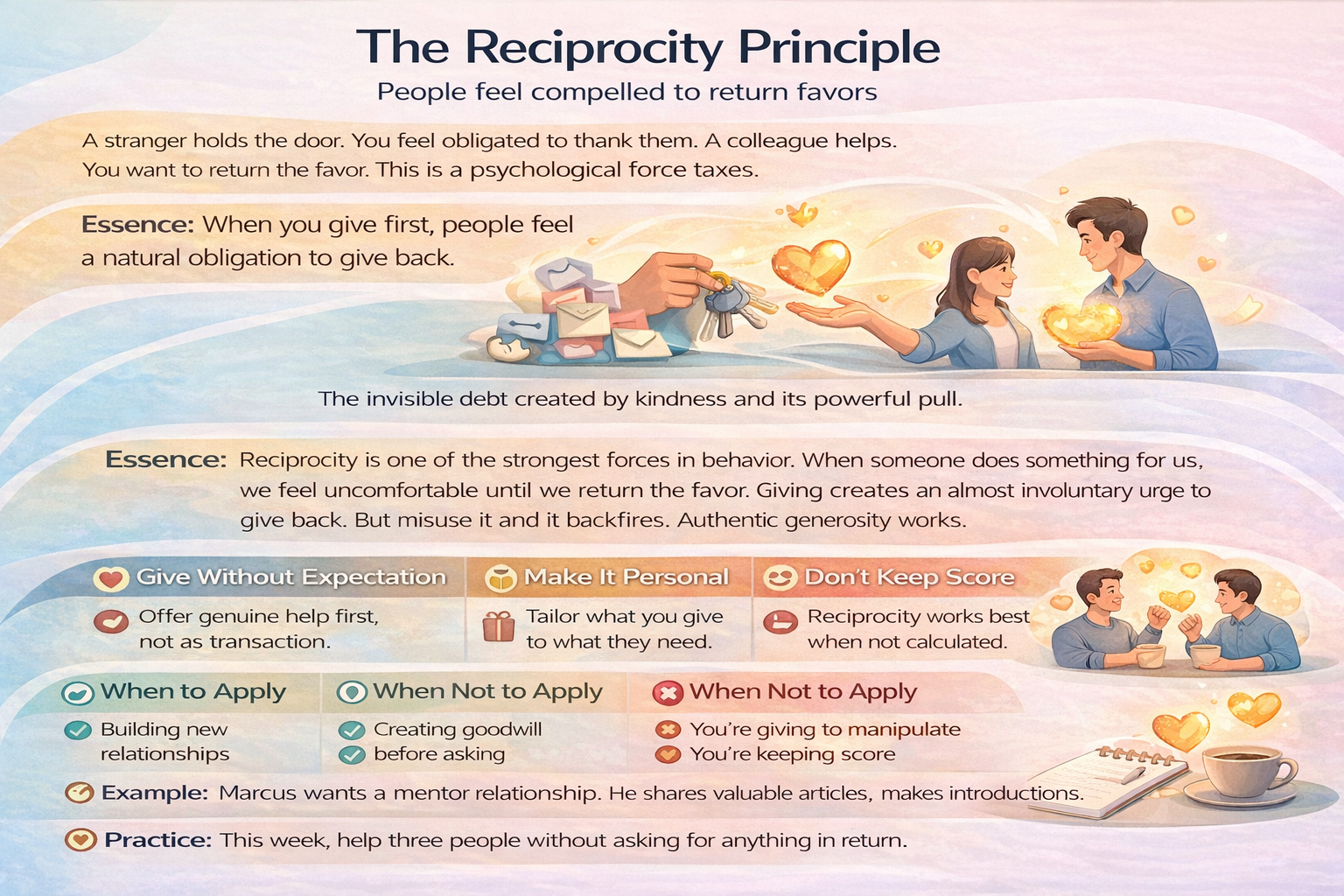
The invisible debt created by kindness and its powerful pull.
Reciprocity is one of the strongest forces in behavior. When someone does something for us, we feel uncomfortable until we return the favor. Giving creates an almost involuntary urge to give back. But misuse it and it backfires. Authentic generosity works.
The Mental Model
-
Give Without Expectation
Offer genuine help first, not as transaction. -
Make It Personal
Tailor what you give to what they need. -
Don't Keep Score
Reciprocity works best when not calculated. -
Allow Them to Return
When someone wants to reciprocate, let them.
A Worked Example
Marcus wants a mentor relationship. He shares valuable articles, makes introductions, offers feedback. Three weeks later, the mentor reaches out for coffee. Marcus gave first. Reciprocity did the rest.
When to Apply
- Building new relationships
- Creating goodwill before asking
- Strengthening partnerships
When Not to Apply
- You're giving to manipulate
- You're keeping score
- It creates unhealthy power dynamics
Try This Once
This week, help three people without asking for anything in return.