Timeboxing
Fixed time, flexible scope
Most people plan by task. They work until it's done. But done is rarely clear. Timeboxing reverses this: you control the time.
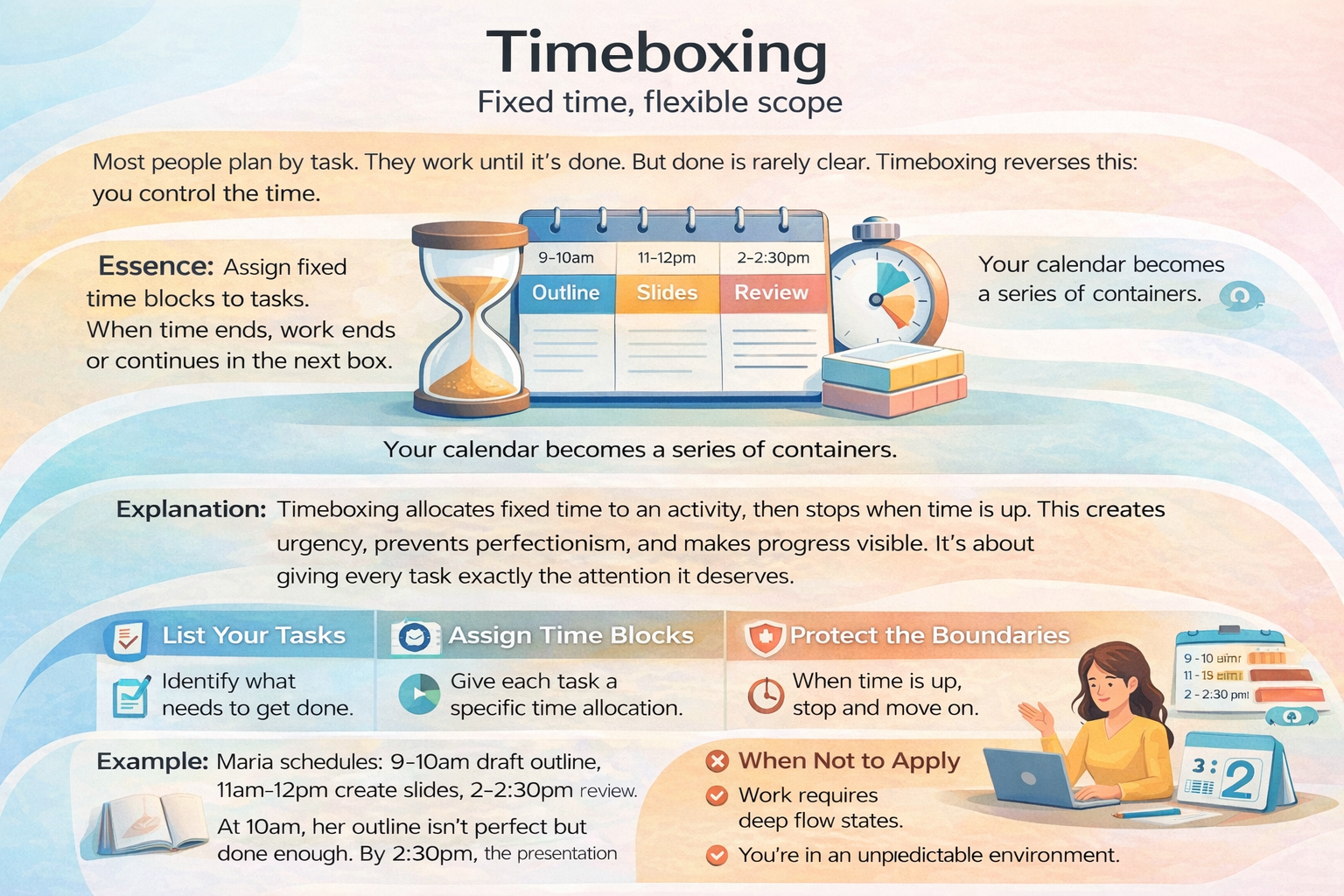
Your calendar becomes a series of containers.
Timeboxing allocates fixed time to an activity, then stops when time is up. This creates urgency, prevents perfectionism, and makes progress visible. It's about giving every task exactly the attention it deserves.
The Mental Model
-
List Your Tasks
Identify what needs to get done. -
Assign Time Blocks
Give each task a specific time allocation. -
Protect the Boundaries
When time is up, stop and move on. -
Schedule Overflow
If incomplete, schedule another box later.
A Worked Example
Maria schedules: 9-10am draft outline, 11am-12pm create slides, 2-2:30pm review. At 10am, her outline isn't perfect but done enough. By 2:30pm, the presentation is complete.
When to Apply
- Your day feels shapeless
- Tasks expand endlessly
- You struggle with context-switching
When Not to Apply
- Work requires deep flow states
- You're in an unpredictable environment
Try This Once
Tomorrow, timebox your entire day. Allocate 30-90 minute blocks.