Active Listening
Hear what's unsaid, not just what's spoken
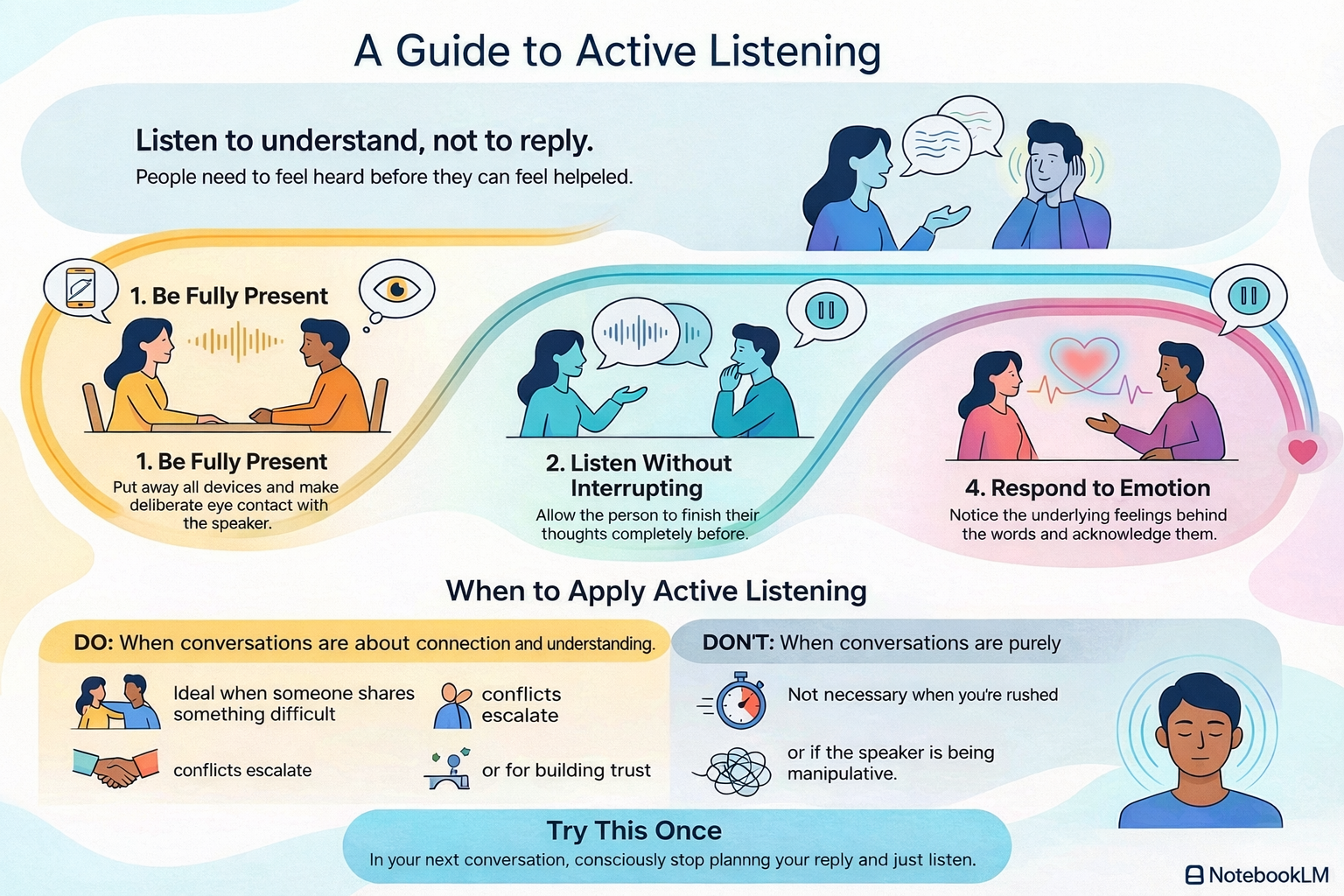
Most people don't listen. They wait for their turn to talk. They hear words but miss meaning. Active listening is about being present.
True listening creates space for others to be fully understood.
Active listening is fully concentrating on what someone is saying before formulating a response. Most conversations are dueling monologues. Active listening means focusing completely, withholding judgment, reflecting back, and noticing emotions beneath words.
The Mental Model
-
Be Fully Present
Put away devices. Make eye contact. Be engaged. -
Listen Without Interrupting
Let the person finish completely. -
Reflect and Clarify
Paraphrase what you heard. Ask questions. -
Respond to Emotion
Notice and acknowledge feelings.
A Worked Example
Sarah says: I'm tired of last-minute requests. Tom responds: It sounds like unpredictability is draining. Is it about lead time or volume? Sarah feels understood. She opens up more. Tom learns the real issue: she feels undervalued.
When to Apply
- Someone shares something difficult
- Understanding complex problems
- Conflicts escalate
- Building deeper trust
When Not to Apply
- Conversation is purely transactional
- You're exhausted
- Speaker is manipulative
Try This Once
In your next conversation, don't think about your response while they talk. Just listen.