Parkinson's Law
Work expands to fill the time available
Give yourself a week to write a report, it takes a week. Give yourself three hours, it still gets done. This is about how deadlines shape work.
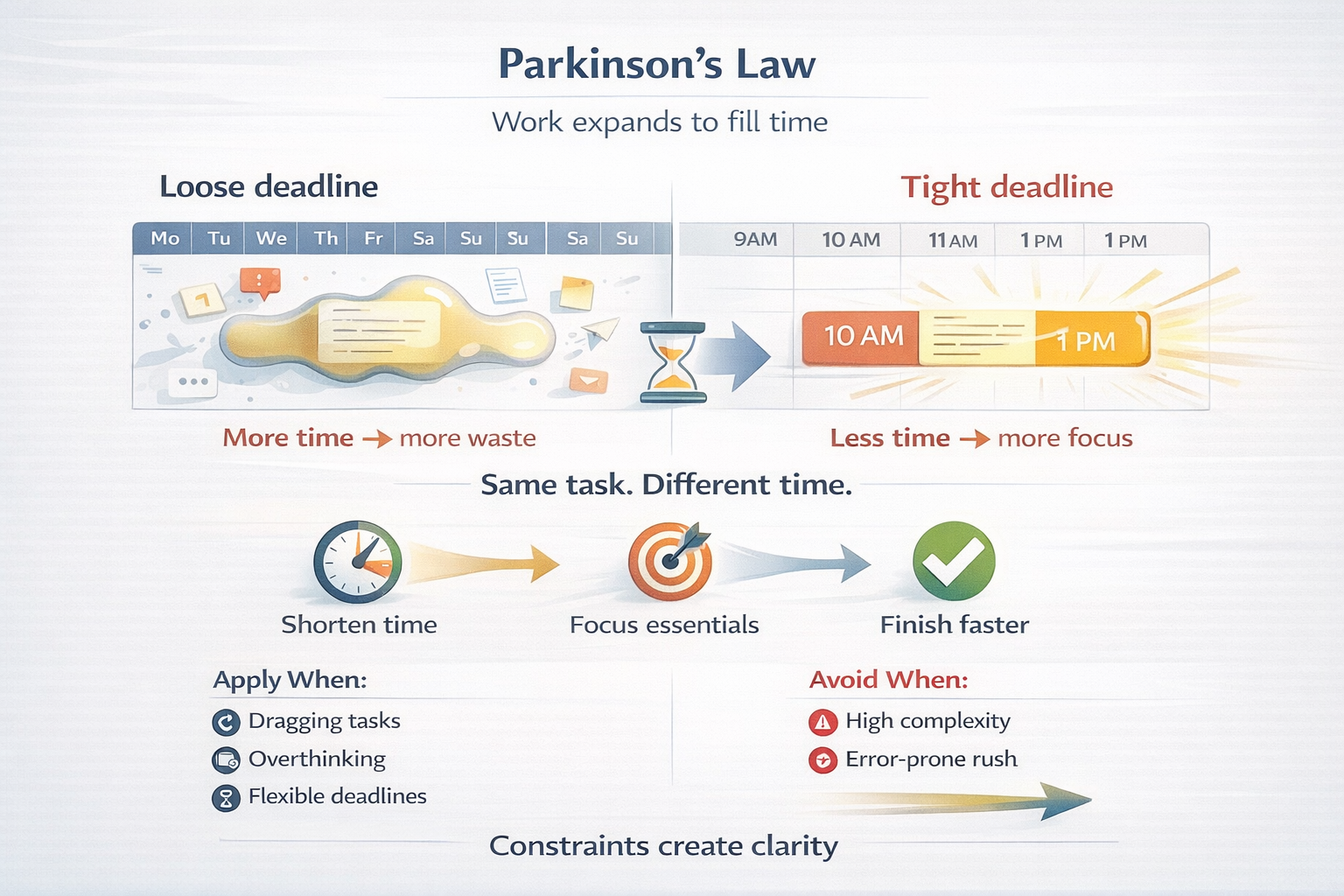
A task occupies exactly as much time as you give it.
Parkinson's Law states: Work expands to fill available time. Artificial abundance of time doesn't improve quality. It creates waste and overthinking. The solution: impose realistic constraints. When time is scarce, you focus on what matters.
The Mental Model
-
Estimate Realistically
Ask: how long if I had to finish today? -
Set a Tighter Deadline
Cut your estimate by 30-50%. -
Work to the Constraint
Use pressure to focus on essentials. -
Review and Adjust
Learn your actual versus perceived capacity.
A Worked Example
James has two weeks for a proposal. By day 8, he has rewritten the intro five times. Next time, he gives himself 4 hours over 2 days. The proposal is tighter and completed with time to spare.
When to Apply
- Tasks take longer than they should
- You overthink simple things
- Flexible deadlines drift endlessly
When Not to Apply
- Work requires deep complexity
- You're consistently rushing and making errors
Try This Once
Pick one task. Give yourself half the time you think it needs.